Teak vs. Powder-Coated Aluminum Garden Furniture: A Practical Comparison for Humid Climates
Humidity is the quiet test of garden furniture. A table can look handsome on a dry showroom floor and still develop a sour smell, a milky film, or a wobbly joint after one wet season outdoors. Teak and powder-coated aluminum are both sensible choices for damp, warm climates, but they solve the problem in opposite ways: one relies on the wood’s own oils and density, the other on a sealed metal frame. The useful question is not which material is “best” in general, but which one suits your patio, your weather, and the amount of upkeep you will actually do.
Weather Resistance in Humid Air
Teak is a dense tropical hardwood with natural oils that help it shrug off rain and damp air. Left untreated, it weathers to a soft silver-grey and generally holds its shape well. It is not invincible. In a humid climate, teak that sits in still, shaded air or on a surface that traps water can grow mildew, black spots, and even a little moss. End grain, joints, and the undersides of tables are the usual suspects. Good drainage and airflow matter as much as the wood itself.
Powder-coated aluminum takes a different route. The aluminum frame will not rust the way steel does, and the powder coat forms a hard, colored skin that keeps moisture away from the metal. Humidity alone is rarely the problem. Chips, scratches, and worn feet are. Once the coating is broken, moisture—especially salt-laden coastal air—can reach the aluminum and cause pitting or a chalky corrosion bloom. Water trapped inside tubular legs or under fittings is another weak point. Both materials prefer to dry out between showers; neither enjoys being parked in a puddle.
In practice, the difference shows up in small details. A teak chair left on a shaded, north-facing balcony may collect a film of green on its arms while an identical chair in sun and breeze stays clean. An aluminum chair beside a pool may be fine until a splash of chlorine water sits inside a leg cap for a week. The lesson is the same for both: the spot matters as much as the material.
Teak: A Little Rhythm Goes a Long Way
Teak rewards simple, regular care more than heroic rescue. Wash it with mild soap and water, use a soft brush on textured surfaces, rinse, and let it dry. Avoid pressure washers, which can fray the grain and force water into joints, and skip harsh bleach or abrasive pads. If mildew appears, treat it early with a mild soap solution or a proprietary teak cleaner used as directed, then rinse thoroughly. A diluted white vinegar solution can help with light surface mildew, but test a small area first and do not soak the wood.
Do not panic at the first silvery sheen. Grey teak is usually a surface change, not decay, and many owners prefer it because it needs no finish and blends into a planted garden. Oil is a choice, not a duty. In humid climates, many owners leave teak bare because oil can hold dust and, in damp shade, make mildew more likely. If you prefer the honeyed look, apply a thin coat of teak oil to clean, dry wood, wipe off the excess, and allow it to dry fully. Expect to clean more often afterward. Check joints and stainless-steel hardware once or twice a year; tighten anything loose and replace damaged feet so the frame is not sitting in water.
Powder-Coated Aluminum: Low Fuss, With Caveats
Aluminum is the easier material to live with day to day. Most marks come off with warm soapy water and a soft cloth. Avoid scouring pads, wire wool, and solvents, which dull or lift the coating. Rinse the frame after storms, especially near the sea, and dry the joints and feet. If a chip appears, clean it and cover it with a touch-up product recommended by the furniture maker; leaving bare metal exposed in a humid climate invites corrosion. Check that drainage holes in legs are clear and that plastic glides are intact.
A tiny chip on a table edge can seem harmless until a winter of damp air turns it into a rough, chalky patch. The same is true of a scratch near a weld, where water can creep under the coating. The fix is quick if you deal with it early, so keep a small touch-up pen or bottle on hand. The finish is the frame’s weather resistance, so treat it with respect. Powder coat can fade or chalk over time, particularly in strong sun, but that is mostly cosmetic. The bigger risk is a network of small breaks that lets moisture into seams and welds. Aluminum furniture is also light, which is convenient for moving but less convenient in gusty gardens. On an exposed terrace, choose heavier frames or plan to anchor or store pieces during storms.
Comfort on a Humid Afternoon
Comfort is where the two materials feel most different. Teak is heavy, stable, and warm to the touch. A well-made teak bench or dining set stays put in wind, feels solid underfoot, and does not turn into a hot plate in direct sun. It still benefits from cushions for long lunches, but the frame itself is forgiving. The weight is a trade-off: moving a teak table across a patio is a two-person job, and dragging it will wear the feet.
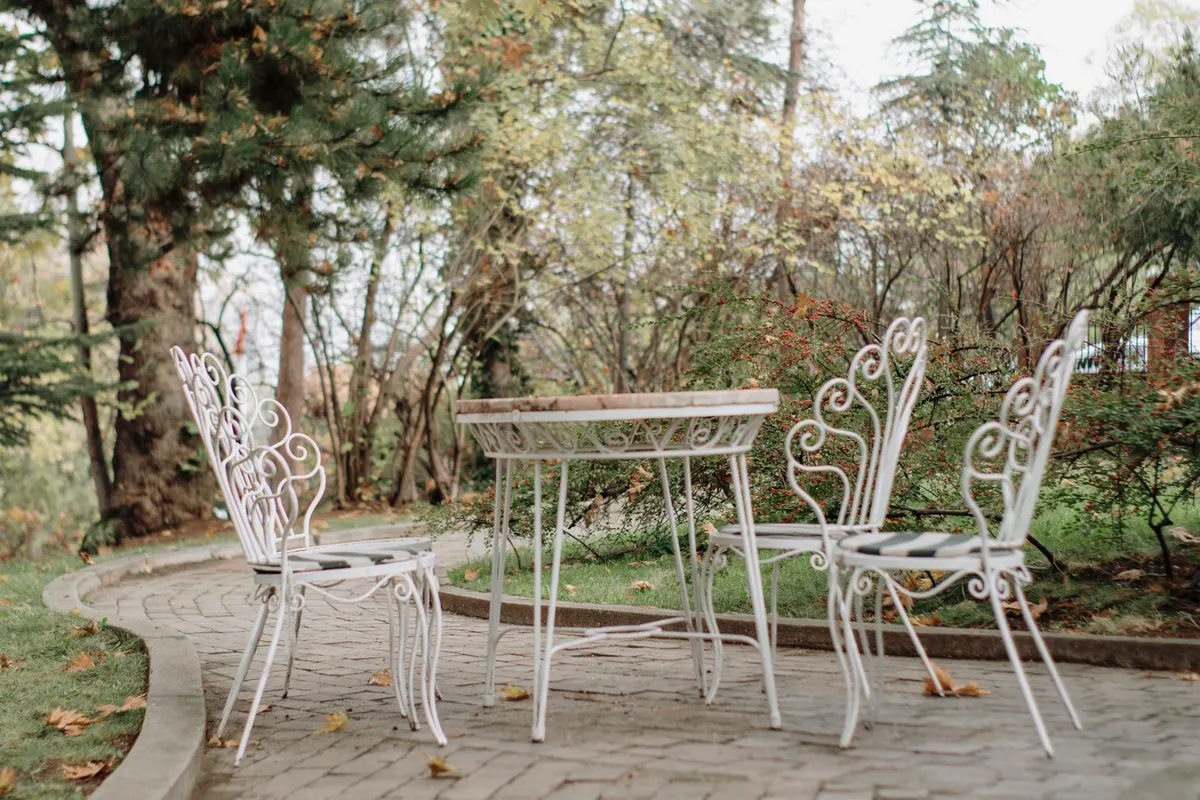
Powder-coated aluminum is light and easy to rearrange, which suits balconies, small terraces, and households that like to shift shade with the sun. Without cushions, metal can feel hot in strong afternoon sun and cool on a damp evening. Slim frames may also feel less substantial. Good aluminum furniture uses wider profiles, shaped seats, and proper cushions; cheap, thin frames can flex and skitter. If comfort is the priority, budget for quality cushions and store them dry—damp cushions are a bigger mildew risk than either frame material.
A Seasonal Routine That Works for Both
Whatever you choose, a small amount of prevention beats a spring cleaning marathon. In a humid climate, the goal is to remove grit and standing water and to let air reach every surface.
- Weekly in wet weather: Tip water off seats and table tops, wipe up leaf litter, and leave chairs spaced apart so air can circulate.
- Monthly: Wash frames with mild soap and water, rinse, and dry the feet and joints. Check teak for early mildew and aluminum for chips or scratches.
- Before storm season: Tighten hardware, replace worn glides, clear drainage holes, and decide which pieces will be anchored or stored. If you use covers, choose breathable ones and only fit them once the furniture is dry.
- After heavy rain: Remove puddles from seat recesses and table tops, dry cushions thoroughly, and check for trapped water inside tubular frames.
- Once a year: Give both materials a closer inspection. Refresh teak oil only if you want the golden look, and touch up aluminum chips before humid weather returns.
Microclimate Matters More Than the Label
A covered porch with morning sun and a breeze is a kinder home than a narrow balcony under a dripping gutter. Teak may thrive in the first spot and struggle in the second; aluminum may shrug off the balcony until its feet sit in a planter saucer that never dries. Before choosing, look at how water moves across your patio, where the sun lands in winter, and whether salt spray or sprinklers hit the furniture. These details will predict performance more reliably than a brochure.
Buy the frame for your microclimate, then spend on cushions, covers, and a little regular care—those are what make either material last.
Cost, Repairs, and Long-Term Value
Teak usually costs more upfront, and a good teak set is heavy enough that delivery and assembly deserve planning. In return, it can be sanded lightly if the surface becomes rough, and solid pieces are often repairable by a carpenter if a joint loosens. Aluminum is generally cheaper at entry level, but quality varies widely. A well-made powder-coated frame with proper welds and drainage can last a long time; a thin, budget frame may flex, chip, and fade quickly. For either material, budget for breathable covers, good cushions, and small touch-up supplies rather than assuming the furniture alone is the full cost.
The practical conclusion is not a universal winner. Choose teak if you want weight, warmth, and a material that ages gracefully with modest cleaning. Choose powder-coated aluminum if you want light, low-fuss furniture that is easy to move and simple to wipe down. In both cases, deal with small problems early—mildew on teak, chips on aluminum—and the humid season will be far less dramatic.
Photo: Berna / Pexels